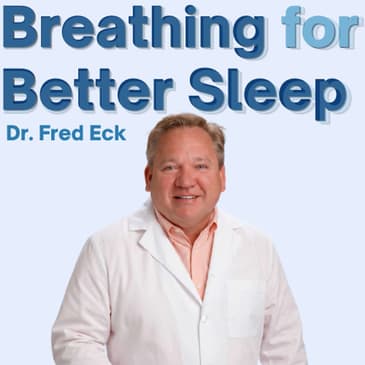
Welcome to Breathing for Better Sleep, the podcast that dives deep into the true causes of sleep apnea, snoring, and sleep-related breathing problems. If you've ever found yourself reaching for sleep aids, supplements, or medications just to get through the night, you're not alone, millions do the same, hoping for better rest. But are these popular solutions actually delivering quality sleep, or are they just masking the symptoms and leaving underlying issues unresolved? In today’s episode, Dr. Fred Eck welcomes renowned sleep expert Dr. Fred Eck to separate fact from fiction when it comes to sleeping aids. Together, they’ll explore how supplements like melatonin and magnesium are often misused, why understanding the root cause of poor sleep is critical, and what truly restores restful, rejuvenating sleep. Whether you’re looking for alternatives beyond prescription pills or wondering if it’s finally time to get a sleep test, this conversation will empower you to take the next step on your journey to better breathing and better sleep.
00:00 Understanding Sleep Quality vs. Quantity
03:49 Using benzodiazepines for sleep issues
07:32 Understanding cortisol and sleep
12:20 Discussing Temporary Sleep Solutions
15:40 Sleep apnea progression and CPAP limits
16:42 Impact of medication on sleep apnea
22:27 Importance of sleep testing
24:22 Discussing human sleep resistance
27:10 Sleep and gut health connection
Are Sleep Aids Just a Bandage? Key Insights from Breathing for Better Sleep
Millions of people pop a sleeping pill or take a supplement each night, hoping for a peaceful slumber. But what if all those over-the-counter “remedies” are just masking the real problem? On episode 1 of the Breathing for Better Sleep podcast, Ibre and sleep expert Dr. Fred Eck dive deep into the myths and risks of sleep supplements and medications, and why finding the root cause is often the only path to truly restorative rest. Here’s what we learned.
Why Are So Many People Turning to Sleep Aids?
Desperation drives people to seek sleep solutions, explained Dr. Fred Eck at 01:03. With marketing promising quick fixes anything from melatonin to magnesium, to prescription pills the temptation is strong. Yet, Dr. Fred Eck cautions, “most of them are misused and misunderstood.” The real solution isn’t usually in the bottle but in understanding what’s causing your sleep disruption in the first place.
Falling Asleep vs. REAL Sleep
Can you fall asleep instantly? While that might sound great, it’s not necessarily healthy. Dr. Fred Eck pointed out at 02:51 that it’s normal to spend a certain amount of time transitioning into sleep. Falling asleep while sitting up or at the dentist is actually a warning sign. More importantly, sleeping through the night does not mean you’re getting quality, restorative sleep. Prescription sleep aids like Trazodone or benzodiazepines (e.g., Valium) may “knock you out,” but they do not guarantee the deep and REM sleep your brain and body need (03:49). In fact, the kind of sleep these medications induce is often fragmented and unrefreshing.
The Limits and Risks of Supplements
Melatonin is one of the most popular sleep supplements, but Dr. Fred Eck says its benefits and limitations are rarely discussed. It triggers your body that it’s “time to wind down,” but doesn’t ensure deep, restorative sleep (06:27). He also revealed that melatonin’s effectiveness depends heavily on gut health. An unhealthy gut microbiome or elevated cortisol (the stress hormone) in the evening can render melatonin supplements ineffective (07:32).
Other supplements, like glycine, collagen, or magnesium, can help, but only if you don’t have underlying issues such as high nighttime cortisol or metabolic problems that block their effects (09:20). And just because supplements are “natural” doesn’t mean they’re harmless. Overuse of melatonin or B vitamins, for example, can be counterproductive and even dangerous, especially in high doses (10:48). Supplements can interact with medications, lower blood pressure, or affect blood clotting.
Medication: Temporary Support, Not a Long-Term Fix
Both CPAP therapy and prescription sleep aids are best thought of as temporary “casts,” according to Dr. Fred Eck (12:20). They can buy time and reduce anxiety during a crisis but shouldn’t be relied upon forever. Medications and devices can mask symptoms like poor sleep or snoring while the root problem, often airway-related, gets worse in the background. This is especially concerning for sleep apnea, a progressive disorder: as the condition worsens, medications and CPAP pressures often need to increase, leading to diminishing returns and heightened risks (15:40).
The Dangers of Masking vs. Treating Sleep Issues
Perhaps the most sobering insight Dr. Fred Eck shared is this: by masking symptoms with pills, you might miss the underlying cause entirely—be it sleep apnea, airway resistance, vitamin deficiencies, or gut health disorders (18:34). People can spend years trying everything, from supplements to “snoring hacks,” before finally getting a sleep test and discovering an airway or breathing disorder (19:50).
When to Seek a Sleep Evaluation
If you’re thinking of buying any sleep aid, that’s the time to get a proper sleep evaluation (22:27). Snoring and poor sleep are not “normal” signs of aging or stress; they may signal a deeper health issue. A sleep test, combined with a thorough medical and airway assessment, is the only way to identify the real obstacle to restorative sleep.
The Takeaway
Quick fixes are alluring, but they often just buy time while your real health concerns fester. If you struggle with sleep or rely on pills or supplements it’s time to look for the root cause. As Dr. Fred Eck summed up: “Get a sleep test. Get to the root cause. That’s where true healing begins.” (26:05)
To learn more about airway-focused sleep care and real solutions, visit sleeptreatmentdirect.com. And remember: better breathing means better sleep and a better life.
Podcast Website - https://breathingforbettersleep.com/
Dr. Fred Eck - Website - https://sleeptreatmentdirect.com/dr-fred-eck/
Podcast Media Partner: TopHealth - https://www.tophealth.care/
“Disclaimer: Informational only. Not medical advice. Consult your doctor for guidance.”
Are these products actually improving your sleep, or are they simply helping you get through the night while an underlying issue remains untreated?
SPEAKER_01Making you go to sleep and making you sleep a long time isn't fixing the problem. It's masking the symptom, the underlying cause. You're masking a problem and you're treating snoring, and meanwhile, you think you don't have sleep apnea and you probably did. Focus on getting to the root cause, as we always are talking about.
SPEAKER_00Welcome back to Breathing for Better Sleep, the podcast where we explore the root causes of sleep apnea and snoring and airway-related sleep issues. If you ever struggle to fall asleep or stay asleep, you're not alone. Millions of people turn to sleep aids, supplements, and medications every night hoping for better rest. From melatonin and magnesium to prescription sleeping pills. There are more options available today than ever before. But here's an important question. Are these products actually improving your sleep, or are they simply helping you get through the night while an underlying issue remains untreated? Today, Dr. Egg helps us separate fact from fiction when it comes to sleeping aids, discusses where they may have a role, and explains why understanding the root cause of poor sleep is often the most important step toward lasting improvement. Dr. Egg, it's nice to see you again. So I wanna start by asking you why you think so many people today are turning to supplements or medications to help them sleep at night.
SPEAKER_01I would say uh well, desperation is a big one. You know, when they've tried everything else and nothing has helped, you know, every everything you see in social media now promises you it's gonna work and it's gonna work quick, right? Anything from medications to supplements to all kinds of contraptions. Uh, there's a lot of products with a lot of promises. There are a lot of supplements that can help, but most of them are misused and misunderstood.
SPEAKER_00Yeah, actually, before we started this podcast, I only knew two treatment options, which was CPAP. Well, actually, three CPAP, surgery, and pills. That's all I knew that existed before I started talking to you. And neither of them seemed so promising. So I can see why people are confused today and resort to the easiest, most available thing that they could find in the market, which are probably supplements, right? And when a patient tells you they're taking something to help them sleep, what's the first thing you want to understand about their situation?
SPEAKER_01Well, first thing we want to know is what have they tried before taking those particular supplements or those medications. We also need to know their medical history. You really have to people that are taking medications to sleep are typically because they're tired all day, they have insomnia, or they have what we call fragmented sleep, where they might sleep six hours, but they don't feel like they're sleeping because of their fragmented sleep and they're not getting into their proper stages. So they're taking them because they're symptomatic. Do they have deficiencies in things like iron, vitamin D, glycine, et cetera? Because all of these things uh can contribute to those sleep issues. So we want to, as always, try to get to the root cause.
SPEAKER_00And many people assume that if they fall asleep faster, they're sleeping better, right? Because a lot of people uh have a hard time falling asleep. Uh is that necessarily true?
SPEAKER_01No, it's it's normal to spend a certain amount of time falling asleep. When somebody can just fall asleep real quick, uh I mean, sitting up in a chair real quick, or you go to the dentist office and you're getting your teeth clean and you fall asleep in the middle of that, that's abnormal. Just because we can fall asleep doesn't mean it's normal sleep. Falling asleep is the first step. Remaining in our proper stages of sleep and staying asleep is the second step. People commonly take prescriptions like trazodone to fall asleep, and it can make them fall asleep, but it does nothing to improve the quality of sleep. Uh so if you sleep 10 hours, but it's not quality of sleep, not quality sleep, then it may not be helping you health-wise or how you feel. So, you know, they can sleep 10 hours and still feel like they didn't sleep.
SPEAKER_00So I know a lot of people take benzodiazepines, right? And is that to fall asleep? Because I know that those are anti-anxiety medications, right? But people use them for as sleep aids as well.
SPEAKER_01Yes, they they oftentimes are used for sleep aids because one of the side effects, you know, if you if you do sedation on somebody, oftentimes benzodiazepines uh like volume is used uh versa. They're benzodiazepines, and the side effect is they make you go to sleep. But again, making you go to sleep and making you sleep a long time isn't fixing the problem. It's masking the symptom, the underlying cause. And your sleep issue can actually get worse because when you take certain medications or even not medication, things like alcohol, these things can relax our airway to a point that it makes our apnea events worse.
SPEAKER_00So people can fall asleep, can sleep through the night and still be getting poor quality sleep, right? Because I I I know that a lot of times I feel like I didn't sleep, but I did sleep. So how how does that work?
SPEAKER_01That goes back to the fragmented sleep. You know, when we have somebody that comes in and says, I have insomnia, I don't sleep. But we give them a sleep test and they actually had six hours of sleep, that's not insomnia. That's fragmented sleep. You can sleep six hours by definition. That is not insomnia, right? So they feel like they're not sleeping because they have this fragmented sleep and they're not staying in their proper stages of sleep. So if all you do is take medications to sleep longer, you're still gonna feel the same.
SPEAKER_00Okay, because you can be sleeping for eight hours, but still feel unrested. And that's what a lot of medications will do. They'll they'll put you in bed for a certain amount amount of time, but they won't, they won't give you the quality sleep that you need to restore, right? And what what's the difference between helping someone become unconscious and helping them achieve restorative sleep? I think that's kind of what you were mentioning, no?
SPEAKER_01I mean, to establish restorative sleep, that's quality sleep, we have to determine the root cause. Why are they getting the fragmented sleep? We've talked about this before, right? When it comes to treating versus managing or masking the problem, right? Managing is just masking the root cause. Uh, but if you don't fix it, you're not necessarily going to feel better.
SPEAKER_00And let's talk about some of the most common supplements people use. What should people know about melatonin, for example?
SPEAKER_01Melatonin is very important. Okay. It's something our body does produce. Our skin produces it. We have glands that produce it. It can actually be produced in our gut as well. So melatonin is something our body needs for multiple purposes, but it is used, one of those purposes, especially the product that's produced out of the brain, is used for sleep. It's designed to trigger to let us know that it's getting dark and it's time to start winding down. It is one of the most misused, overused supplements in the world. It is very important and plays a role in things, like I said, even beyond sleep. We're going to stick to the sleep stuff here today. Something often overlooked is the gut microbiome. For melatonin to work properly, our gut microbiome must be correct. The relationship between a healthy gut and sleep is critical, and it's something that everybody seems to be ignoring. Melatonin can help you fall asleep, like a prescription medication can help you fall asleep, right? But they won't create the quality of sleep. So melatonin is not designed to necessarily create quality of sleep, just to trigger our body to let it know it is time to go to sleep, right? The other important things to understand about melatonin is why doesn't it work for a lot of people? One, as I talked about, bad gut health. Okay. There's a lot of people that take supplements like melatonin, like vitamin D, and they can't get their levels right because they have bad gut health. Cortisol. Cortisol is important because what's supposed to happen is cortisol is supposed to be high in the morning as your melatonin is going down, right? And then cortisol decreases during the day and is really low at night when your melatonin is supposed to be elevating, right? If your cortisol cycle and curve is off and you have high cortisol in the evening time, that's gonna make the melatonin, what you're producing and what you're trying to take as a supplement not work. Elevated cortisol will prevent sleep. Okay. The other thing people don't think about, insulin is another competitor to melatonin. So if you're eating a big meal at night and raising your insulin, that's gonna make melatonin not work properly. So that's why you pretty much the rule is you eat during the light. And when it's dark, you don't eat because melatonin is supposed to be working at those points. And if you're doing anything eating, especially carbs or anything that raises insulin later in the day, it's gonna make it more difficult to eat. I mean, I'm sorry, to sleep.
SPEAKER_00So it's more it's more of a balance rather than this is the neurotransmitter that we need to fall asleep. It's the balance of them all in your own body's production and and your own body's creation of these components.
SPEAKER_01Yes, everything has to be in balance. And, you know, and just and we'll talk about this in a little bit, but just because you're taking something that's a supplement, a lot of people think that they don't have risk, uh, but they can. We'll talk about that in a little bit because I know you wanted to talk about that.
SPEAKER_00Yeah, I I I just want to know, is there a point or is there a a time where melatonin does actually help or where it is recommended or healthy for someone to take it? Or would in your perspective, is it best to just regulate your own body's production?
SPEAKER_01There are supplements that can be beneficial, including melatonin, okay? Glycine, for instance, is needed to get into REM sleep. Also, glycine can be another thing that's beneficial. Collagen can be beneficial, okay? Collagen also increases glycine and helps us get into REM sleep. Magnesium glyconate, right? There are supplements that can be beneficial, but some of them don't work because we have other things preventing them from working. If your cortisol is high at bedtime, you're gonna have a problem sleeping. Then it doesn't matter what you take. And that's why people take these supplements and they start taking these massive doses to try to overcome that, and it just doesn't work.
SPEAKER_00And what about magnesium, CBD, herbal remedies, or are there popular sleep supplements? Are there situations where they can be helpful? You mentioned just now that that if cortisol is high, then nothing that you take basically will counter counter-effect. Is that the word?
SPEAKER_01I mean, if you have certain things going on, then these supplements don't work. All of them can be beneficial. Mostly not everything on the market can be beneficial, but the stuff that I mentioned, those can all be beneficial in the right doses given that there's no underlying cause preventing that supplement from working. And it goes back to getting back to why do we have the sleep issue to begin with and and and making sure there's none of these other problems.
SPEAKER_00And are there risks to assuming that because something is natural, it's automatically the right solution?
SPEAKER_01Yeah, as I was just saying, people will take, you know, let's say melatonin and it doesn't work, and then now they're bumping it up, and now they're bumping it up, and now they're taking massive doses of melatonin. For instance, B vitamins are important for gut health and sleep. But too high of a dose of these can actually have the adverse effect on sleep. So there's certain levels where it's beneficial, and then you get to a level where it actually has the opposite effect. Melatonin, you know, has a function as an anti-inflammatory, as an antioxidant. So therefore, melatonin affects the metabolism of certain things. So it can affect the metabol metabolism of things like caffeine. Okay. So, which means it can affect the metabolism of certain pharmaceuticals. So you always want to check with your doctor if you're taking supplements, and especially if you're trying to take the higher doses. You know, blood pressure can be lowered by melatonin. Even things like fish oil, people don't think about it, right? But fish oil can affect blood clotting. So just because it's non-prescription doesn't mean it can't have an impact on us.
SPEAKER_00That's a really good point you're making because I think that I always take supplements at something that it's completely harmless because they're over the counter, because they're usually na natural things. So you you never consider them to be dangerous, but it's good to know that it is important to take supplements in the proper way and not just take them mindlessly thinking that it doesn't have an effect in your health. And when do prescription sleep medications make sense? And when should patients be cautious about relying on them long term?
SPEAKER_01Well, I have the same conversations with patients about prescription sleep aids as I do with CPAPs. I consider them both temporary solutions to get us through a situation. So if somebody is getting so much anxiety and issues because they're stressing out about the fact that they're not sleeping, then they can benefit for this because some people just, and again, they may not feel necessarily rested in the morning, but some people really get worked up over not being able to sleep. So if it's going to benefit you short term, then it can be beneficial. But obviously the long-term goal in my world is to get off of uh prescriptions, drink, you know, medications and off a CPEP. Because as we've discussed in the past, that's this is never intended to be for long-term use.
SPEAKER_00So we're going back to the example that you gave us about the cast, right? Those medications are managing the symptoms while you fix the the actual problem, but they're not the treatment. They're not they're not actually working with the root cost. They're just helping you while you while you fix the root cause or while you treat the root cost.
SPEAKER_01Yeah. So you're managing or masking the symptoms while you're coming up with kind of a treatment.
SPEAKER_00And when uh because you mentioned two things, managing and masking. So I'm I'm guessing there's a difference there. Managing will be when there's a plan when you're actually working towards something and there's a purpose for for those medications to be there, and masking will be just when you're thinking that.
SPEAKER_01Well, managing and masking are kind of the same thing. Your treatment is treatment where you're trying to do something to address root cause of a problem. Managing a situation is just managing symptoms or masking symptoms. So I use managing and masking interchangeable because all you're trying to do is help symptoms. Okay. So if you break your arm, the treatment would be the cast, right? The management or the masking would be anti-inflammatories, antibiotics, pain medications, things to make you feel better. But the cast is what's going to make in time, it's what's going to make the arm heal.
SPEAKER_00Okay. And can sleep medications sometimes mask symptoms of sleep apnea or other sleep disorders?
SPEAKER_01It can, uh, but it usually, what it usually does is just allow us to get to sleep. Okay. So it reduces our anxiety about not sleeping. Remember, these medications, they don't often make us feel better. So they're getting us to sleep, but they can, in real life, sometimes be dangerous because if they knock us out or sedate us, it can actually be risky, right? So if we're unable to respond to apnea events because we're so heavily medicated, that makes them last longer, makes our oxygen drop more, and makes them more dangerous. Sleeping pills, when we have sleep apnea, have risk and can definitely make our sleep apnea worse.
SPEAKER_00I was just gonna ask the about that. So if someone got treated or if someone got diagnosed with sleep apnea 30 years ago and they were given benzodiazen, for example, to treat, I'm saying treat because that was the approach, but really they're just masking the symptoms. That that 30 years later that sleep apnea progressed, if they were just taking that medication as a treatment.
SPEAKER_01Yes, sleep apnea is a progressive disorder. So if you redo somebody's sleep test in a year or two, their numbers are going to be worse. And another year or two, they're gonna be worse again. This is why we talked about in the past why the CPAP is really designed to be a temporary solution, because every few years, as your sleep problem gets worse, the pressure on that CPAP machine has to go up for it to keep working. Okay. And once that pressure gets to a certain amount, it could be bad for us. No different than somebody's on, let's say, trazodome. I I mean, I see people every week who say, yeah, I was on trazodone for 10 or 15 years, but now it's not working anymore. So it's not working anymore because the sleep problem has progressed. And now that dosage that used to work on them had to go up, and now they're on max dose and it's still not working. So the sleep problem has just gotten worse.
SPEAKER_00And let's say from someone that never got it treated versus someone that got pills, would the sleep problem progress in the same way? Or would the ones would the ones with taking the pills have a more progressed disease than those that didn't get it treated?
SPEAKER_01I have not seen anybody kind of research about that, but you know, I mean, common sense is going to say they're gonna both progress and they would probably progress similarly, okay, because the medication is masking a problem. It's not doing anything to stop the progression. So the problem with the prescription medications is especially when they get to the higher dosages, as we said, if you're knocking yourself out to sleep, and especially with the higher doses, especially when you're using things like benzodiazepines and pain meds, you're altering your respiration system, you're altering your ability to respond to an apnea event. So the person on the medication, the events, they can each have the same number of apnea events, but that person who's sedated is probably allowing those apnea events to last longer. So if the average apnea, if you had take somebody's got 60 apnea events and they're averaging 12 seconds, and then the other person has 60 apnea events, but they're lasting 40 seconds because they're on this medication, that makes their, even though their AHI score is the same, they're getting more consequences from it because they're lasting longer, oxygen's dropping more, more organ damage, et cetera.
SPEAKER_00Okay, that that was actually, you just answered my question. So there is a higher risk for those people that are sedated just because they're they're they're airway relaxes and it can be more harmful than than not. And if someone is repetitively waking up because they're struggling to breathe during sleep, can sleeping pill actually make it harder to recognize the real problem? So once they're sedated, can can it be harder for them to realize that they're struggling to breathe?
SPEAKER_01Yeah, and it's and it's not that uncommon because you know, we a lot of people that come and see us, they they themselves think that they don't have a sleep problem. It's the spouse, the bed partner, who's annoyed by the snoring, scared of the the breathing events. Okay. And this person oftentimes they don't they don't perceive a problem. So it can it can mask everything, you know, all and it's not just, this is very important because it's not just supplements and prescription sleep medications, okay? There are lots of things being advertised uh because snoring is one of those things that drives people to treatment, right? Well, if you're snoring, you should have a sleep test done because it may not just be snoring. It may be sleep apnea or upper airway resistance or something else that goes along with it. So all of these people buying all these over-the-counter snoring aids and all these different things used to improve snoring without a sleep test, they shouldn't be doing that because you might improve that snoring some. But with those over-the-counter products, you are not getting rid of your sleep apnea. So you're masking a problem and you're treating snoring. And meanwhile, you think you don't have sleep apnea, and you probably do.
SPEAKER_00So, people, what I'm hearing is that people are treating snoring as if it's snoring is the problem itself. But snoring is actually a symptom of something deeper, right?
SPEAKER_01And that and this symptom of an airway problem, symptom of airway resistance.
SPEAKER_00And how often do you see uh patients who have spent years trying supplements, medications, or sleep hacks only to discover an underlying airway or sleep breathing breathing issue?
SPEAKER_01I mean, it's typical. Our patients, before they come to see us, believe me, they've tried everything under the sun. Uh, they've tried supplements, they've tried over-the-counter this, they've tried all those devices we're talking about that they can find on Facebook and Instagram and everywhere else. So they've tried it all. And it's very common. Most of those people try all of that stuff for years before they actually come to see us. And keeping in mind that when you develop sleep apnea, you've been getting sick and have had an airway problem for probably 20 years, right? So if you're 50 years old and get diagnosed with sleep apnea, you've probably had some degree of breathing disorder for 20 years. And a lot of your medical history will point that out. Blood pressure, blood sugar, thyroid, et cetera, high cortisol, everything.
SPEAKER_00So interesting. So for a lot of people, getting a sleep test and actually going to the sleep doctor is the last resort. Like they try everything before.
SPEAKER_01Yeah.
SPEAKER_00That's so interesting. So I guess we want to change that. We're here to change that. Like, why waste so many years of your life when you can start earlier and probably make it more manageable and less of a less tiring?
SPEAKER_01And it goes back to the fact that when they know they have a problem or their doctor says, hey, go get a sleep test. They still think because it's just, you know, it's just they just still think the only options out there are surgeries and a CPAP, and they don't want to wear the mask. So they don't bother. They try everything else first.
SPEAKER_00Yeah, I guess they it's they're resisting to those procedures or that the that treatment which is so invasive. We know who wouldn't be resistant to wearing a mask on their face while you're sleeping for the rest of your life because it feels so counterintuitive. Like if if someone's telling you to put on a mask on that's like blowing air at you for the rest of your life so that you can sleep better, it seems like torture. It doesn't seem like it's something that's gonna help you rest. It seems like something that's gonna disturb you even further.
SPEAKER_01And that's I mean, that's one of the things, right? CPAPs improve oxygen really well. But the one thing it doesn't do for most people is improve that fragmented sleep. Most people's deep sleep get worse with a CPAP, not better. So, you know, we have patients every single week who we say, why did you wait 10 years? You had a test 10 years ago, 15 years ago. Why are you waiting this long to treat it? They all say the same thing. They're afraid of the mask. They don't want the mask.
SPEAKER_00And what are some warning signs signs that someone may need a sleep evaluation instead of another supplement? So when would be a good time for a person to realize, I need a sleep test? Like I'm not gonna go and look for anything over the counter.
SPEAKER_01Well, the moment you think you got to start looking for something is the moment you need to get the sleep test done. Figure out what's going on, what the diagnosis is, first of all. And we do not advise or alter or offer supplements or medications without a full medical history and a sleep test. We have to figure out the root cause. So anybody with any issue, anybody walking in to buy any sleep aid of any kind should have a sleep test done. It is not normal. The problem is we talked about this before. We're normalizing bad sleep. We're as a as a as a country and as a world pretty much, we're just saying we're too busy, this, that, and the other thing, and bad sleep has just become normalized. Snoring has become normalized. It's not normal.
SPEAKER_00Yeah, and I think we look at all the other reasons why we're having bad sleep instead of just focusing on the fact that we're having bad sleep. It's like we look at everything else instead of realizing that maybe poor sleep is the cost of all the I don't know if I'm making sense, but we we we look at our lifestyle or at at whatever's worrying us as a reason as why as to why we're having bad sleep. But maybe the actual step is to look at our sleep, and then that will help everything else improve because it's it's true. This is our restoration time. It's the the way our bodies heal and it's it's the process in which we reset and and repair. So if we're not having good sleep, how are we able to live a good life?
SPEAKER_01Truly isn't we are we are pretty much programmed and designed to spend a third of our life, right? Eight hours a day sleeping. So if we're supposed to spend a third of our life sleeping, there's probably a reason for it, right? I mean, we're the humans are the only animals that purposely alter what would be considered normal sleep. You know, we force ourselves to stay up, up late, stay up and watch a movie. What we're the only animals that do that. Other animals lay down and sleep when they're supposed to. We don't.
SPEAKER_00Yeah, it's crazy how we've messed up with our cycle so much. Like like you mentioned, it's animals sleep when the sun goes down and you know, get up when the sun comes out, and that's just the natural rhythm. And and I and I bet, well, I don't know this, but I bet the sleeping problems don't exist in the other animals, just in humans. And uh so I have one last question for you, but before I get to that, I'd like to know, you know how people are really resistant to getting a sleep test be because of the reasons that you've mentioned before, because everyone resists either getting surgery or CPAP. What can you say to those people who feel afraid to just go get checked to get eva evaluated on on their sleep? How can you encourage them to do that?
SPEAKER_01The main thing is letting them know that the sleep test today is easy to do. You don't have to go stay in a lab or anything. You do it at home. So it's it's not complicated to do, it's very simple to do. And the main thing you want to do is when you're requesting a sleep test, just request a sleep test from somebody that does, if you don't want the mask, then get a sleep test from somebody who doesn't provide mask. Get it from somebody who's doing the alternatives. So you're not gonna feel like you're gonna be forced to try a mask first. Because those people who are treating with the alternatives, like us, it's not that none of our patients don't ever get a mask. 90% of our patients are treated without a mask. About 10% of our patients do end up with a mask. But when they do, it's a temporary solution in combination with something else. Why are we waiting for something else to get us where we need to be?
SPEAKER_00And if you could leave listeners with one message about supplements, sleep medications, and achieving better sleep, what would it be?
SPEAKER_01Focus on getting to the root cause, as we always are talking about. You know, if you're breathing or snoring or having apnea issues, there's a cause. So get a 3D image of your airway. We've talked about that before. That's critical. A sleep test can tell me what's going on, but the only reason why I know why it's going on is a blood panel and a 3D image of your airway. So our 3D image allows us to see your pharyngeal airway, your nasal airway, your sinuses. If we have restrictions or kinks in the hose, where are they at? Uh, because that gives us an idea. Are your sinuses full of stuff? You know, because that contributes. But we want to figure out what's going on and what the root causes are. And just always get the sleep test done. That way we know you do not have to have sleep apnea to have a sleep disorder. Sleep apnea is one of about 60 sleep disorders. It's not even the most common, right? There are other sleep disorders. Vitamin D, vitamin B, all the vitamin Bs. People don't realize there's more than B12, right? There's B12, there's B50, there's B100, like there's so many B vitamins. There's glycine. All of these are important for sleep. And a lot of these things like vitamin D and the B complexes are critical for gut health as well. There's no, no, it's not a coincidence that so many people have GERD and acid reflux and irritable bowel disease in a combination with a sleep disorder. Because if we have issues with our gut, sleep is affected. If we have a sleep issue, it affects our gut. One will affect the other. So we must figure out if you're deficient in anything and what the root cause is.
SPEAKER_00Thank you so much, Dr. Eck, for such an insightful conversation and for giving us all this information to look at our health with. And thank you for joining us for another episode of Breathing for Better Sleep. If today's conversation made you think differently about sleep aid supplements or medications, share this episode with someone who may benefit from hearing it. And if you'd like to learn more about airway focused sleep care and treatment options, visit sleeptreatmentdirect.com. Until next time, remember better breathing, better sleep, better life.