
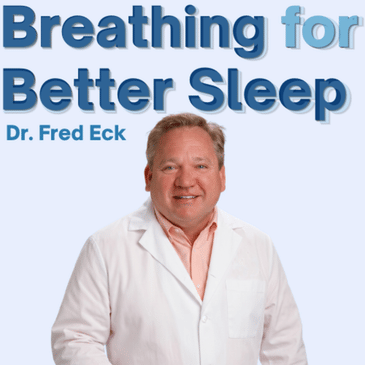
Welcome to another episode of Breathing for Better Sleep, where we explore natural root cause solutions for sleep apnea, snoring, and childhood sleep challenges without relying on CPAP machines or surgery. In today's discussion, host and sleep expert Dr. Fred Eck to address the frustrations so many people experience with CPAP, the so-called gold standard for sleep disorders. If you've ever felt defeated or hopeless after struggling with masks and machines, this episode reveals why the model fails so many, how insurance drives outdated care, and what real alternatives exist that tackle the actual cause of sleep problems.
Drawing from Dr. Fred Eck's extensive experience with thousands of patients, you'll hear personal stories, expert insights on sleep progression, and practical advice for finding truly effective treatment options. Whether you're searching for hope after CPAP disappointment or just curious about what's possible beyond the mask, this episode is packed with essential information on what really works and how to chart your own path to restorative sleep.
00:00 CPAP Misses Key Sleep Concerns
05:17 "Rethinking CPAP and Sleep Care"
07:53 "Reevaluating CPAP as Standard Care"
10:21 CPAP Costs and Cleaning Commitment
14:41 "CPAP Challenges and Alternatives"
18:17 "Cure Sleep Issues, Not Mask"
22:16 Sleep-Induced Breathing Issues
25:34 Airway Treatment Options Explained
26:22 Sleep Apnea Treatment Options
29:51 "Airway Evaluation and Root Cause"
33:54 "Causes of Sleep Disorders"
35:58 "Better Sleep, Real Solutions"
Beyond the Mask: Real Sleep Solutions from “Breathing for Better Sleep” Episode 4
If you’ve ever felt frustrated or defeated by the “gold standard” of sleep apnea treatment, CPAP, you’re not alone. Episode 4 of Breathing for Better Sleep dives deep into why so many people hit a wall with CPAP therapy, explores the real reasons behind these struggles, and importantly, offers hope for those searching for something better.
Hosted sleep expert Dr. Fred Eck, the episode begins with a powerful assertion: it’s not patients who fail CPAP, it’s often the model itself that fails them. The podcast takes a compassionate look at the lived experience of thousands who struggle nightly not just with sleep disorders, but with disappointing treatments and misunderstood emotional consequences.
Why Does CPAP Fail for So Many?
Dr. Fred Eck shares that about half the patients he consults have either tried and failed CPAP or found it incompatible with their lifestyle. Whether it’s noise, discomfort, or the impracticality of traveling with bulky equipment, CPAP is no silver bullet. More striking, standard monitoring devices on CPAP may tell users things are “working,” but in reality, without proper sleep studies, many go years without realizing their underlying condition is progressing.
One memorable patient had used CPAP for years, his device reported compliance, but his snoring (and its marital consequences) persisted. Worse, follow-up sleep tests showed his apnea indexes actually got worse over time. Dr. Fred Eck emphatically recommends that anyone using CPAP should do a sleep test with the device in place and reassess every few years to ensure continued efficacy.
The Hidden Costs of ‘Gold Standard’ Treatment
So why is CPAP still the “gold standard”? Dr. Fred Eck gets candid about the inertia of the healthcare system, where insurance companies drive practices based on decades-old evidence and financial interests, often ignoring new, more effective options. While CPAP may seem economical initially, its ongoing costs for cleaning, replacement parts, and maintenance can add up about $700 a year. If you’re not diligent about cleaning, there are serious lung health risks. Moreover, compliance in studies is based on using CPAP just four hours a night, while health benefits require six to seven hours.
Most revealing: even after decades of widespread CPAP use, rates of heart attacks in sleep apnea patients remain unchanged. Dr. Fred Eck also introduces the concept of “mean disease alleviation” (MDA), showing that CPAP has a success rate of just 55% and, in reality, may be as low as 30% when considering true compliance.
Root Cause Matters - Airway First Approach
If CPAP isn’t working, what’s next? Dr. Fred Eck describes a new model: airway-first sleep care. Instead of simply managing symptoms by putting a mask on it, airway-first means evaluating the actual source of restriction. This can be done by specialized dentists and ENT doctors using 3D imaging and a thorough airway examination. Only by finding the root cause can treatment be truly effective.
The best outcomes often require combination therapy. Options include myofunctional therapy (breathing and oral exercises to correct function), precision oral appliances, palatal expansion, laser and radio frequency therapies to reduce tissue bulk, and nutrition and supplement support. Myofunctional therapy is especially effective for children, showing a significant reduction in apnea events.
Hope for the Defeated: There Are Real Alternatives
One of the most touching aspects of the episode is the emotional journey of patients who’ve tried everything and feel hopeless. Many fear that failure with CPAP means there’s no solution left except risky surgeries. Dr. Fred Eck reassures listeners, there is hope. His practice treats even severe cases and complex central apnea without masks or surgery, using these advanced, tailored modalities.
The message is clear: You are not the failure, the system is. By seeking root-cause care that treats, not just masks, your sleep issues, you can reclaim restful nights and better health.
The Takeaway
If you’re staring at the ceiling, wide awake with a mask you hate, know there are options and a path to real, lasting relief. Listen to “Breathing for Better Sleep” not just for information, but for empowerment on your journey to rest.
Podcast Website - https://breathingforbettersleep.com/
Dr. Fred Eck - Website - https://sleeptreatmentdirect.com/dr-fred-eck/
Podcast Media Partner: TopHealth - https://www.tophealth.care/
“Disclaimer: Informational only. Not medical advice. Consult your doctor for guidance.”